

- On January 1, 2026
- In Places to visit Tips for travellers
What To See In Amsterdam in 2026: 16 Best Tips

Wondering what to see in Amsterdam beyond the postcard highlights? The big museums and canals are unmissable, but this dense little city hides dozens of quirks most visitors walk straight past. Below you get both: a quick run-through of the icons you shouldn’t skip, then 16 lesser-known spots that locals actually love — the odd churches, secret courtyards, rooftop bars and creative hangouts that make the city feel like yours.
The must-see icons you shouldn’t skip
If it’s your first time, a handful of sights earn their fame. See these, then use the rest of this list to go deeper than the average visitor:
- The Rijksmuseum — the nation’s treasure house, home to Rembrandt’s Night Watch and Vermeer’s quiet masterpieces. It’s the one museum almost nobody regrets; here’s our full Rijksmuseum guide.
- The Van Gogh Museum — the world’s largest collection of his work, on timed tickets that sell out, so book Van Gogh tickets well ahead.
- The Anne Frank House — a moving, sobering hour in the canal house where the diary was written. Tickets are online only and released weeks in advance, so plan early.
- The canal belt and the Jordaan — the UNESCO-listed rings of water and the pretty lanes beside them are the city’s real masterpiece; wander the Jordaan and see our pick of the best canals.
- Vondelpark — the green heart where locals jog, picnic and drink in the sun; our Vondelpark guide has the details.
Tick those off and you’ve seen the essentials. Now for the good part — the 16 spots most guidebooks miss.
Amstelkerk
This wooden Dutch church was originally constructed as a temporary church back in 1668. The church was constructed with haste because the Amsterdam canal ring was expanding rapidly at the time, which meant more churchgoers that needed to be served. Temporary became permanent.
These days the church functions as a multipurpose building. It hosts office spaces and an art gallery area, which can be visited for free during office hours. The larger midsection of the building often host chamber music events.
Fun fact: during Napoleons visit in 1811 this church supposedly functioned as the stable for his horses.
Het Boomzagertje
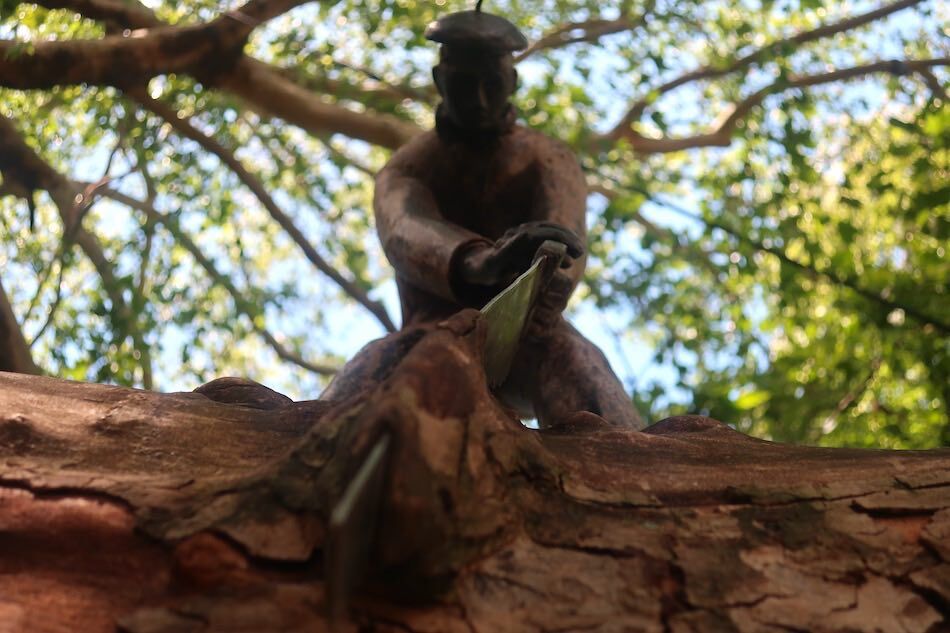
One of the six statues that suddenly appeared in Amsterdam. The maker has remained anonymous. The unknown sculptor placed his statues in the citiy in the 80’s and 90’s in the dead of night, without a prior notification.
Het Boomzagertje (the small tree cutter) is a touching little statue of a man who puts his saw in the tree. 25 years have passed since it first appeared and the tree now encapsulates the statues feet and saw.
Fun rumor: some people speculated that the former queen of the Netherlands made the statues, because one of them had a face that looked like the one of her husband.
Brouwerij ‘t IJ
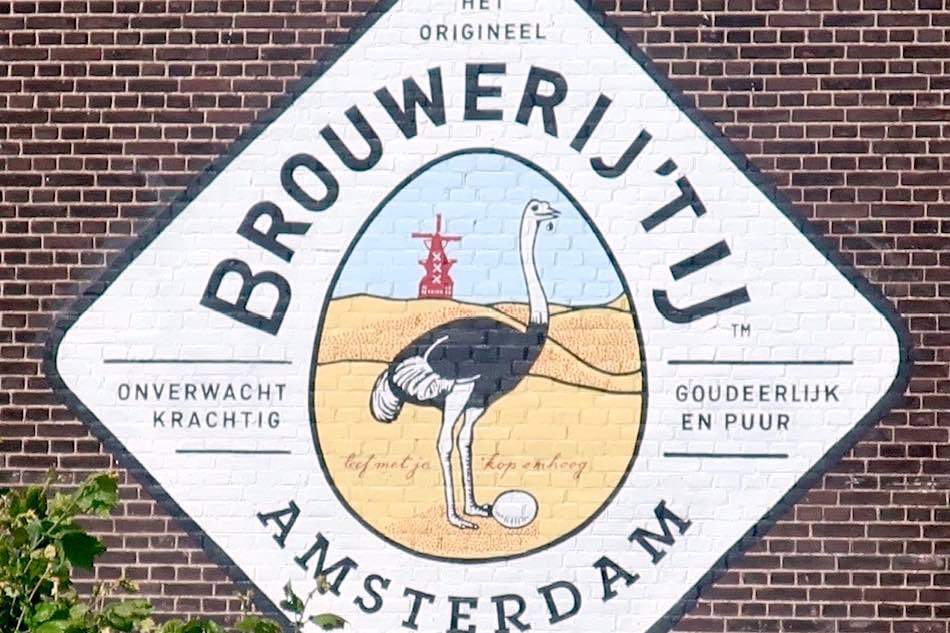
Beer from Amsterdam has conquered the world (Heineken, Amstel), but if you truly want to taste some locally brewed beer you should visit Brouwerij ‘t IJ. They offer a wide range of 25 types of beers!
This brewery is located in a former bathhouse next to one of Amsterdam’s last remaining old Dutch windmills. This brewery also has amazing terrace that fills up after each workday during the summer season. Long tables with beer, whine or juice make for an informal atmosphere where you easily meet new people.
Still wonder: What to see in Amsterdam? Discover more free tips below:
Café In t’ Aepjen
This café is located in the Red Light District, in an old wooden house, one of the oldest homes in Amsterdam! It dates back all the way to 1544. This was the sailor hot spot for centuries. Back in the day sailors brought back all kinds of exotic animals from their journeys and on more then one occasion these animals were used to pay the bar tab.
The owner of the café kept the monkeys he got in little cages as entertainment so his guests had what to see in Amsterdam. This explains the name of Café In T’ Aepjen (Monkey). Besides a great historical setting they also serve some quality Dutch Jenever (gin). A must visit!
This amazing Dutch bar is in the area covered by our Amsterdam Red Light District Tours.
Chinatown
In 1911 Chinese shipping stokers were the first Chinese to settle in Amsterdam. These days Amsterdam’s Chinatown is considered to be the oldest Chinese settlement on the European mainland. However, Asian town might be a better term as the area around the Zeedijk and Geldersekade also hosts many Thai, Korean, Japanese and Asian fusion restaurants.
However the Chinese remain the largest group that is present in the area. In Chinatown you’ll find the He Hua Temple at the end of the Zeedijk, close to the Nieuwmarkt. This is the largest traditional Chinese palace style Budhist temple in the whole of Europe. A must what to see in Amsterdam!
The temple is in the area covered by our Red Light District tours. Click on the link above to find out more.
EYE
What looks like a flying saucer is actually Amsterdam’s film museum: EYE. It’s located across the IJ-river behind Amsterdam Central Station. The architect Delugan Meissel tried with this design to translate the experience of film medium into architecture. The Architects present the building as a sequence of scenes. Inside the museum there are 4 theatre rooms with an extensive collection of old and new films.
The large exhibition space presents 4 different expositions each year that highlight the thin line between film, visual arts and other types of media. For those who don’t care about any of that there’s also a very wide and sunny terrace with a great view of the IJ-river.
Don’t stop scrolling. Discover what to see in Amsterdam now!
Floor 17
On top of the Ramada Apollo Amsterdam Centre Hotel in the western part of town sits Floor 17 an 85-meter high rooftop terrace. This terrace offers a spectacular view of the city and is open when the weather permits it. Comfy couches, beanbags and mellow music create a relaxed lounge atmosphere. Even in the wintertime this is an excellent spot as the terrace is transformed in the highest skating rink of the city.
De Hallen
This is the new hotspot of the city. This former tram depot has been transformed into a large cinema with 9 theatre rooms and a large food hall section. As a subtle reminder to the history of the place you can still see tram rails in some parts of the building. The beautiful restoration alone is worthy of a visit. The covered food market is the main attraction and is modeled after examples from London, New York and Madrid. Around a central bar stand 20 different trendy booths that serve the higher end types of street foods.
Hollandsche Manege
In the center of Amsterdam there’s a surprising experience! One that shouldn’t surprise any local though since the Hollandsche Manege (Dutch Horse Riding School) has been in Amsterdam since 1882. Dolf van Gendt who also designed Amsterdam’s concert building designed the building, a National Monument.
These days it’s promoted as the living horse museum because of the 54 horses in the stables. A hidden treasure in the museum is the neoclassical style foyer where it appears that not much has changed in 130 years. Those who can already ride a horse can take lessons in astride horseback riding.
Hortus VU
The cactus collection alone is reason enough to pay a visit to VU Hortos, VU’s very own botanical garden. Three tables both 10’s of meters long are filled from front to end with cacti and succulents, the largest collection of their kind in the Netherlands.
Other greenhouses contain large collections of orchids and ferns. In the tropical greenhouse it’s like your entering the Amazonian rainforest! Visit this unique spot in Amsterdam whilst it still exists.
Royal Palace
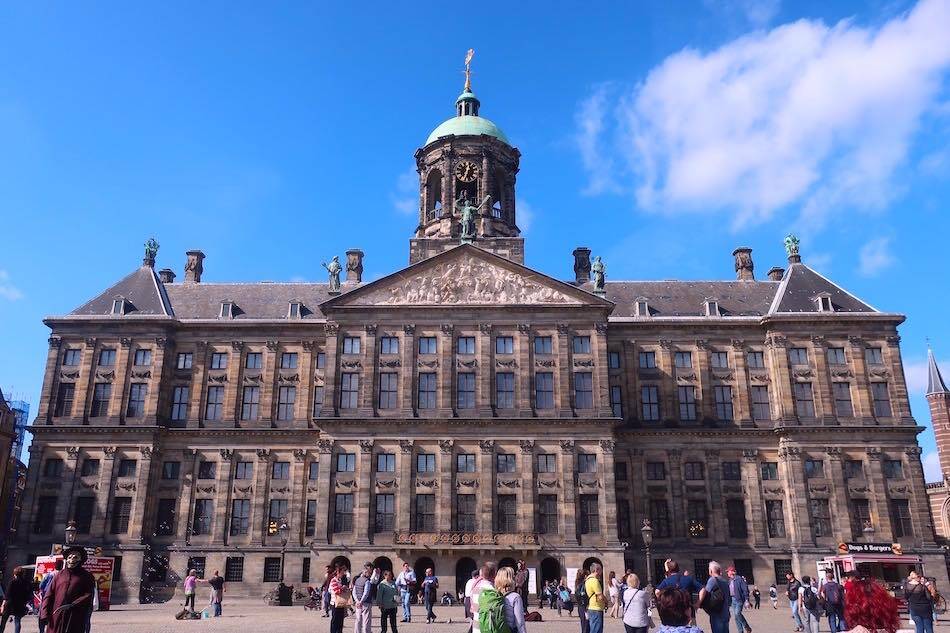
Completed in 1655 Amsterdam’s new city hall was constructed with Amsterdam’s newly acquired power and wealth in mind. The 17thcentury municipal government dared to think great and constructed the largest governmental building of Europe at the time and presented Amsterdam as the center of the universe.
Amsterdammers used to proudly speak of the 8th world wonder. The Royal Palace on Dam Square has an impressive classicist design. The interior dates back to the rule of Napoleon, whose brother took up residence and turned the city hall into a palace.
This place is a must visit for anyone who’s interested in Amsterdam’s golden century.
Amsterdam Red Light District
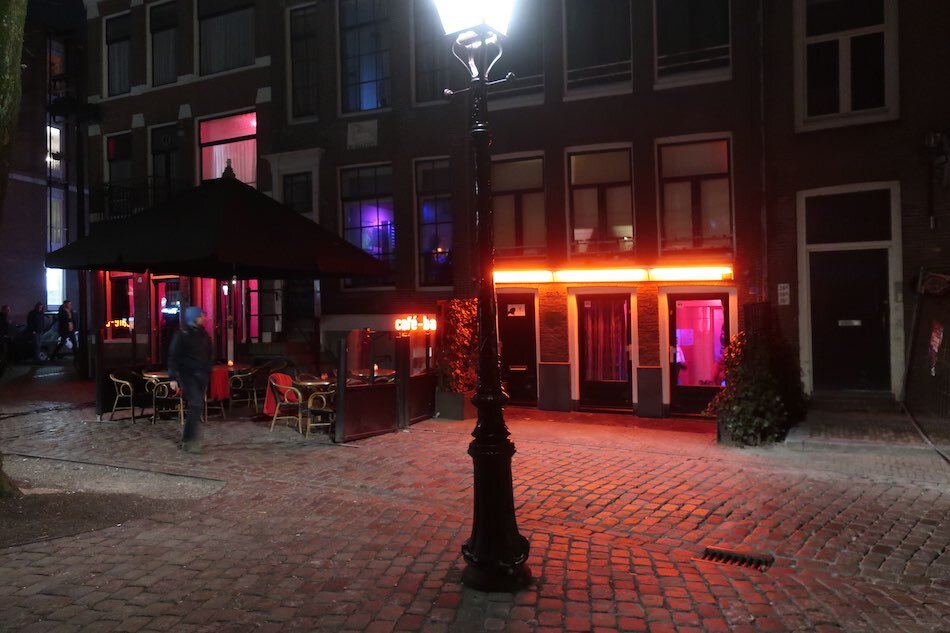
The most famous area in Amsterdam. Anything deemed unholy you can probably find in this area, window brothels with sex workers, bars, restaurants, smoke-filled cannabis coffeeshops, strip clubs you name it. The locals also know this neighbourhood as De Wallen.
But few know that this area is located in the oldest part of Amsterdam. Sex work in the Red Light District actually dates back to the 1300’s. Amsterdam was already turning into a busy trading port back then and all those sailors needed entertainment.
Despite what some may think, escorts do not work behind the windows in the Red Light District. Here you will only find window prostitutes.
Also do not miss out on the live sex shows at Moulin Rouge Amsterdam. They’re amazing and you can join as volunteer on stage during your visit, if you’re up to it.
This is why the area is located so close to Amsterdam’s Central Station, which was planted right in the spot that used to be the old harbor.
NDSM Werf
This former shipbuilding wharf is one of Amsterdam’s last real cultural sanctuaries. Shortly after the closure of the wharf in 1985 artists and outcasts discovered the area. Gradually ever more creatives such as artists, theatre makers, free thinkers and enthusiasts entered the area, where for a short while there were no rules.
As creative hotbeds were closing all over the city in 90’s some artists banded together and presented a plan to the municipality to make the wharf the largest creative hub of Europe. The NDSM wharf has since functioned as a model for the development of similar creative spots all over the world. Expect a creative treasure when you visit this part of town!
Oost-Indisch Huis
When people talk about Holland’s golden century the VOC, world’s first corporation, will always be discussed. The Oost –Indisch Huis (East-Indian House) served as headquarters of the most powerful and wealthiest corporation that the world has ever known.
These days the building is owned by the Amsterdam University and houses the faculty for political, social and cultural sciences. But it takes little imagination to see the 17thcentury merchants.
This place that reminds the visitor of the start of the Dutch colonial era also commemorates its end. A plaque remembers 12 American journalists that died in a plane crash after a Dutch press junket trip. 50 years later it was found out that Indonesian Republican separatists were possibly behind the crash.
Amsterdam Trees Street
On the Lomanstraat in Amsterdam you can find these beautiful trees that look like they come from a Harry Potter movie.
Volkshotel
After a thorough renovation the Volkhotel (peoples hotel) re-opened its doors as a hotel, café, restaurant and club where, as one would expect with such a company name, everybody is welcome! There’s close to 24/7 hours of different entertainment options for every type of person.
At the ground floor things are lively in “werkplaats”, with on the left a café with among other things a chilled game corner, and on the right long tables and meeting rooms for flex workers. At the backside of the building are workspaces for creative spirits.
But to really get a feeling of the building you’ll have to take the elevator to the 7thfloor. Enter Club Canvas with its rooftop terrace with a great view of Amsterdam. After 10 pm all the tables and chairs are cleared from the floor and infamous club canvas nights start off inside.
And if you’re up for an all-nighter head back down to the basement to Doka “the basement where life happens in the dark”.
The Best Street Markets in Amsterdam
We also listed 7 street markets in Amsterdam which offers clothing, (Dutch) food, tulips, books, art, vinyl records, jewelry, etc. Check it out!
7 MARKETS IN AMSTERDAM >Where to wander: Amsterdam’s best neighbourhoods
Half of what to see in Amsterdam isn’t a single sight at all — it’s the districts, each with its own character. Give yourself time to just walk these:
- The Jordaan — narrow lanes, tucked-away almshouse courtyards (the hofjes), brown cafes and the Noordermarkt. The most photogenic quarter in the city.
- De Pijp — the lively, multicultural south, built around the Albert Cuyp Market and full of terraces and small restaurants.
- Amsterdam-Noord and NDSM — a free ferry ride across the IJ takes you to the post-industrial creative quarter on this list, plus street art, festivals and rooftop views.
- The Nine Streets (De 9 Straatjes) — a grid of independent boutiques and cafes threaded through the canal belt, ideal for a slow afternoon of shopping.
- Oost (East) — leafy, local and home to the ARTIS zoo and the Tropenmuseum, well off the tourist trail.
The best views in Amsterdam
A few spots on this list are really about the view, and they beat fighting the crowds at ground level. Floor 17 and the Volkshotel’s rooftop both trade a lift ride for a drink with a skyline; across the water in Noord, the terrace at EYE looks straight back at the old city, and the nearby A’DAM Lookout adds Europe’s highest swing for anyone with a head for heights. For a free version, simply climb aboard one of the IJ ferries behind Central Station — the five-minute crossing is one of the best no-cost experiences in the city.
How many days do you need, and how to get around
Most first-timers find two to three days about right: enough for the big museums, a canal cruise and a proper wander, with time left for a few of the quirks on this list. Got longer? Add a day trip to the windmills or a nearby canal city. Tight on time? Our 2-day and 3-day itineraries map it all out hour by hour.
Getting around is easy. The centre is small and flat, so walking covers most of it, and a canal cruise is the classic way to see the grand houses from the water. For longer hops, the GVB trams, metro and free IJ ferries do the job, and if you’re visiting a stack of museums it’s worth pricing an I amsterdam City Card, which bundles transport with free entry. Feeling brave? Renting a bike is the most local way to travel — just read up on cycling in Amsterdam first, because the traffic takes no prisoners.
When is the best time to see Amsterdam?
Amsterdam works year-round, but the season changes the mood. Spring is the showpiece — tulips everywhere, the nearby Keukenhof gardens in bloom, and the whole country turning orange for King’s Day on 27 April, the biggest street party of the year. Summer brings long days and packed canal-side terraces, though it’s also the busiest and priciest time. Autumn thins the crowds and lights the canals in gold, while winter is cosy and cheaper, with the Amsterdam Light Festival glowing along the water and the museums blissfully quiet. For the best balance of decent weather and fewer tourists, aim for late spring or early autumn. Whatever month you pick, check the Amsterdam weather by month before you pack — the one constant is that it can rain at any time.
Frequently asked questions
What is the number one thing to see in Amsterdam?
For most first-time visitors it’s the Rijksmuseum, home to Rembrandt’s Night Watch and the finest collection of Dutch Golden Age art anywhere. A close second is simply the canal belt itself — the UNESCO-listed rings of water are the sight the whole city is built around.
What is Amsterdam best known for?
Its canals and gabled houses, world-class art museums (the Rijksmuseum and Van Gogh Museum), the Anne Frank House, cycling culture, and a famously liberal outlook that includes the Red Light District and coffeeshops. It’s also known for the Jordaan’s charm and a lively cafe and market scene.
How many days do you need to see Amsterdam?
Two to three days is the sweet spot for a first visit — enough for the main museums, a canal cruise and time to wander the neighbourhoods. Add a day or two if you want a day trip to the windmills, Leiden or the coast.
What should you not miss in Amsterdam?
The Rijksmuseum, the Van Gogh Museum, the Anne Frank House, a walk or cruise through the canal belt and the Jordaan, and Vondelpark. Beyond those, the lesser-known spots on this list — from Brouwerij ‘t IJ to NDSM and the He Hua Temple in Chinatown — are what make a trip feel personal.
What is there to see in Amsterdam for free?
Plenty. The IJ ferries behind Central Station, the Amstelkerk gallery, window-shopping the Nine Streets, the Begijnhof courtyard, the city’s street markets, and simply walking the canals all cost nothing. Several viewpoints on this list, like the EYE terrace, are free to enjoy too.
Is Amsterdam a walkable city?
Very. The historic centre is compact and flat, and most of the big sights sit within a 30-minute walk of one another. Watch out for cyclists and tram tracks, and use the trams or a bike only when you’re crossing town or heading to Noord.
What is the most beautiful part of Amsterdam?
The Jordaan and the western canal belt around the Nine Streets are widely considered the prettiest — narrow lanes, humpback bridges, houseboats and 17th-century facades. The stretch along the Brouwersgracht canal is a particular favourite.
What can you see in Amsterdam in one day?
With one day, pick one major museum (the Rijksmuseum or Van Gogh), take a canal cruise, wander the Jordaan and the Nine Streets, and end in or near the Red Light District. Our one-day itinerary lays out an efficient route so you don’t waste time backtracking.
Is 2 days enough to see Amsterdam?
Two days is enough for the highlights — one major museum, a canal cruise, the Jordaan and the Red Light District — if you plan a tight route. Three days is more comfortable and lets you add a few of the lesser-known spots on this list, or a short day trip.
Do you need to book Amsterdam museums in advance?
For the busiest ones, yes. The Anne Frank House is online-only and sells out weeks ahead, the Van Gogh Museum uses timed tickets that go quickly, and the Rijksmuseum can ask for a timeslot at peak times. Smaller, lesser-known sights you can usually just walk into.
What is unique to Amsterdam?
The scale and preservation of its 17th-century canal ring is genuinely one of a kind, as is the sheer density of houseboats, bikes and gabled merchant houses. Add the Anne Frank House, the world’s largest Van Gogh collection and quirks like the He Hua Temple and the anonymous street statues on this list, and you get a mix you won’t find anywhere else.
So, there you have it! Our top picks for things to see and do in Amsterdam when you’re on a budget. If you want more tips or ideas, be sure to check out our other blog posts or hit the green button below to get all sorts of travel advice. And finally, don’t forget to enjoy your time in this beautiful city – after all, that’s what traveling is all about! 🙂
MORE AMSTERDAM TIPS >